Showing posts with label nature. Show all posts

Tuesday, December 28, 2010

Fossilised

This is Cherub's princess box:


And this is what is inside:


Together with:


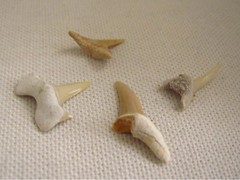
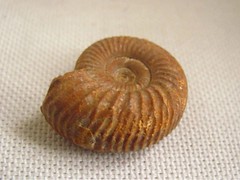
And so on ... fossilised shark's teeth, a couple of ammonites and assorted other small fossils.

Cherub, inspired by an episode of Charlie and Lola, decided she liked fossils. I gave her a couple in the autumn and then added a small box of cheap fossils I bought on eBay to her Christmas stocking. It didn't have a list of contents, so we have been trying to identify them as best we can (my knowledge of fossils is close to zero!).

We think we have a belemnite:


A bit of dinosaur eggshell:


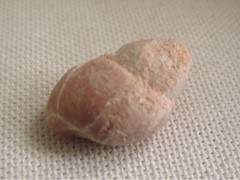
A gastropod:


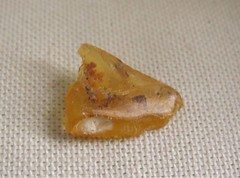
And amber with an ant(?) and other debris inside:


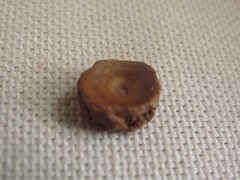
Some were more of an identification challenge, and I'm not sure whether I have them right or not. This, I think, may be a toadstone (a fossilised fish tooth):


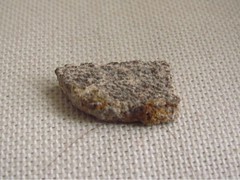
This one puzzles me. It may be a trilobite or crinoid fragment?


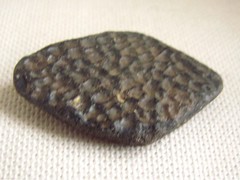
And this one. Fossilised bone, perhaps?


Any help with identifiction gratefully received!

Cherub has quite a good grasp of what fossils are, but her concept of time is still a little vague, as demonstrated by this conversation.

Star: How old are fossils?

Cherub: Very, very, very, very, very old.

Star: Older than Grandma?

Cherub (confidently): Oh, yes! .... (then more hesitantly) They are, aren't they?

Friday, August 20, 2010

Garden Wildlife

I moved Cherub's paddling pool and discovered the ants had built a nest underneath. There were hundreds (or thousands!) of eggs - by the time I thought to get the camera the ants had already hidden a good proportion of them.


Here are some ants busily carrying eggs down a hole in the bottom left corner of the picture.


Cuter and more furry than the ants were our little visitors from playgroup, who were playing hard to get in their tunnel on the one occasion I remembered the camera.


Wednesday, May 06, 2009

100 Species Challenge: List of Plants

This is my running list of plants identified for the 100 Species Challenge, each linked to the post giving information about that plant.

1. Daisy
2. Creeping buttercup
3. White clover
4. Selfheal
5. Dandelion
6. Red clover
7. Autumn hawkbit
8. Weeping willow
9. Horse chestnut
10. Sycamore
11. Alder
12. Elder
13. Ragwort
14. Mugwort

15. Lesser celandine
16. Germander speedwell
17. Green alkanet
18. Greater stitchwort
19. Bugle
20. Red campion

100 Species Challenge: Green Alkanet

(also known as Evergreen Bugloss)

Scientific name: Pentaglottis sempervirens
Family: Boraginaceae
Flowers: April to July

I found huge quantities of this plant growing in this churchyard, couldn't find it in my basic wildflower guide, but was able to identify it online. Green alkanet is indiginous to south-west France and Spain, and was brought to Britain in the middle ages thanks to the red dye produced by the roots. It was often planted around monasteries so that the dye could be used for vestments - I wonder if this is how it came to be in the churchyard? The name originates from the same Arabic root as henna.

Sunday, April 05, 2009

100 Species Challenge: Part 6

Back in August last year I started a 100 Species Challenge, aiming to identify one hundred separate species of local plants. I'm afraid I am a fair-weather naturalist and haven't added to my list since October, but in the spirit of Rule 7 I am picking up again where I left off:

7. Participants may take as long as they like to complete the challenge.
For the time being, at least, I am including my running list of plants, with new additions in bold.

Species identified:

1. Daisy
2. Creeping buttercup
3. White clover
4. Selfheal
5. Dandelion
6. Red clover
7. Autumn hawkbit
8. Weeping willow
9. Horse chestnut
10. Sycamore
11. Alder
12. Elder
13. Ragwort
14. Mugwort

15. Lesser Celandine
16. Germander Speedwell

Lesser Celandine


Scientific name: Ranunculus ficaria
Family: Ranunculaceae
Flowers: March to May

Lesser celandine is a member of the buttercup family and, confusingly, completely unrelated to the greater celandine. Common names for the flower include smallwort, figwort, brighteye, butter and cheese (love that one!), and pilewort. That last name gives a clue to its main medicinal use. Yes. Haemorrhoids.

Once in flower the plant becomes toxic, but if picked before the flowers appear the leaves can be eaten as spring greens. Here is a recipe for Lesser Celandine Strogonoff (yet again I am amazed at what it is possible to find on the internet!).

Lesser celandine was a favourite flower of the poet Wordsworth, who memorialised it in three poems ...
To The Small Celandine

Pansies, Lilies, Kingcups, Daisies,
Let them live upon their praises;
Long as there's a sun that sets
Primroses will have their glory;
Long as there are Violets,
They will have a place in story:
There's a flower that shall be mine,
'Tis the little Celandine.
Read the rest of this poem and other other two here.

My photograph was taken early in the day while the flower still had its petals folded. As it brightens they open like this.

Germander Speedwell


Scientific name: Veronica chamaedrys
Family: Scrophulariaceae
Flowers: March to July

There are many varieties of speedwell, but I am 99% certain that this is the commonly found germander speedwell. This pretty little pale blue flower has equally pretty common names: angels' eyes, bird's eye, God's eye, and eyebright.

The name of the speedwell genus, Veronica, is no coincidence. The markings on the inside of the flower are said to resemble the markings left on the cloth used by St. Veronica to wipe the face of Jesus on His way to His crucifixion.

Speedwell is mentioned in a number of poems. This verse is from Tennyson's Spring:
Bring orchis, bring the foxglove spire,
The little speedwell's darling blue,
Deep tulip's dashed with fiery dew,
Laburnums, dropping-wells of fire.
In herbal medicine speedwell is used to treat coughs and catarrh, and as a blood tonic.

Information: A Contemplation Upon Flowers (Bobby J.Ward)

Saturday, October 25, 2008

Book Finds

A couple of nice out of print books I picked up on Thursday ...

Beatrix Potter's Countryside Book ... a nice little nature study guide. There are suggested activities for each season, accompanied by Beatrix Potter's illustrations - some from her books, others from her own nature studies.

The Radium Woman by Eleanor Doorly ... a biography of Marie Curie for children. I have seen this (and her other two scientific biographies, The Insect Man and The Microbe Man) before, but not at an affordable price. I have a history of France by the same author which is a gem - more on that in my next bookshelf post.

When I went to pay, it turned out that Oxfam were having a "five for five pounds" sale on children's books, so for an extra pound I added Lambs' Tales from Shakespeare" (which I have a sneaky feeling I may already have!), Monkey Puzzle for Little Cherub, and a children's cookbook.

Tuesday, October 07, 2008

100 Species Challenge: Part 5

Species identified:

1. Daisy
2. Creeping buttercup
3. White clover
4. Selfheal
5. Dandelion
6. Red clover
7. Autumn hawkbit
8. Weeping willow
9. Horse chestnut
10. Sycamore
11. Alder
12. Elder
13. Ragwort
14. Mugwort


A couple of similar named and rather unprepossessing flowers photographed at the country park ...

Ragwort

Scientific name: Senecio jacobaea
Family: Asteraceae
Flowers: June to November

To begin with I wasn't certain about my identification of ragwort. It is a toxic weed that causes fatal poisoning in horses and I vaguely imagined it was controlled to the point of being rare. A bit more research, though, suggests it is more common than I thought. Toxicity is not its only bad point - it is an unpleasant smelling plant and has acquired names like Stinking Nanny and Mare's Fart. However, it has a redeeming feature - ragwort is very attractive to insects, including bees, wasps (harmless varieties), hoverflies and butterflies. No less than thirty species feed solely on ragwort, so eliminating the plant from the countryside would have a detrimental effect on biodiversity. Conservation organisations argue that the number of horse deaths supposed to be due to ragwort are greatly overestimated, and that sensible controls are all that is needed - removing ragwort from fields where horses graze, and ensuring fodder is clear of ragwort, while leaving it in moderate amounts elsewhere. Ragwort is also naturally controlled by other insects, particularly the cinnabar moth and the flea beetle. This article from Buglife includes a huge amount of information about ragwort and its related fauna.

Mugwort

Scientific name: Artemesia vulgaris
Family: Asteraceae
Flowers: June to September

This was a new plant to me - I'm sure I have seen it before, but I had never identified it. Mugwort has a bitter flavour and was at one time used as a seasoning - for example, a sprig of mugwort was a traditional addition to the Christmas goose in Germany. In Korea and Japan mugwort is used to give a greenish tinge to rice cakes. Before the introduction of hops it was used to flavour beer - as it is supposed to be hallucinogenic, this may have led to the beer having a double effect! Mugwort is also supposed to have magical properties - those hallucinations again? In the middle ages it was known as the Girdle of St. John, as it was believed that St. John the Baptist wore it in the wilderness. Related superstitions include the idea that if gathered on St. John's Eve it has a protective effect against misfortune, and if worn as a crown on the same day it prevents possession by the devil. Like ragwort, mugwort can have some very nasty effects. It is a major allergen, triggering both hayfever and allergic asthma. Ugh!

Thursday, October 02, 2008

Ourdoor Hour

This Handbook of Nature Study blog by Harmony Art Mom looks a wonderful resource. She posts regular Outdoor Hour Challenges based on Anna Comstock's Handbook of Nature Study. Now, I didn't get on with the book and sold my copy - I found it too dense and had trouble adapting it for the UK - but based on a quick skim through it looks as though the blog has plenty of ideas that can be used without the book and wherever you are in the world.

HT: Some nice person's blog. (Note to self: when clicking on blogger's links, try to remember where you found the link.)

Tuesday, September 02, 2008

100 Species Challenge: Part 3

Species identified:

1. Daisy
2. Creeping buttercup
3. White clover
4. Selfheal
5. Dandelion
6. Red clover
7. Autumn hawkbit
8. Weeping willow
9. Horse chestnut
10. Sycamore

Rules of 100 Species Challenge
Previous posts

Between our housing estate and the main road is a long patch of green, with a number of trees planted around 35 years ago when the houses were built. The photos of weeping willow and horse chestnut were taken there. The tall sycamore grows on a small patch of common ground in front of our next-door-neighbour-but-one.

Weeping Willow

Scientific name: Salix babylonica
Family: Salicaceae

The weeping willow originated in China, where it grows along the banks of the Yangtse River, and was first introduced into Britain in 1730. The scientific name salix babylonica was given by Carl Linneaus, inspired by this verse from Psalm 137:

By the waters of Babylon,
there we sat down; yea we wept
when we remembered Zion.
Upon the willows in the midst thereof
we hanged our harps
In fact, this is a mistranslation and the trees by the waters of Babylon were not willows, but poplars (which are also part of the salix family).

Weeping willows are traditionally associated with sadness and loss. Napoleon was buried on the island of St. Helena under a weeping willow.

Information: University of Glasgow

Horse Chestnut

Scientific name: Aesculus hippocastanum
Family: Hippocastanaceae

The horse chestnut is native to Northern Greece, and was introduced to the UK via Turkey in the 17th century. In the USA it is known as the "buckeye" and is the state tree of Ohio. There are two suggestions for the "horse" in the name: (1) that the fruit were fed to horses in eastern Europe, and (2) because the leaf scars on the twigs are shaped like horseshoes.

Timber from horse chestnuts is soft and poor quality. Until recently, its main use was in making artificial limbs, because it is both light and not prone to splitting. It is also used to make packing cases. It doens't make great firewood either, as it spits a lot when burned.

The fruit of the tree, known in Britain as conkers, are high in carbohydrate. They can be crushed and boiled to make a meal for cattle and sheep, though apparently pigs will not eat it. Humans also find conkers unpalatable (I've tasted them and they are bitter and unpleasant!) but during World War I it was calculated that for every ton of horse chestnuts harvested to use for animal feed, half a ton of grain could be saved for human consumption. They were also collected by children to use for ammunition. And no, we weren't reduced to firing conkers at the enemy! Acetone was required to produce cordite (explosive), and a method was discovered by which the starch from horse chestnuts could be fermented to make acetone. The scientist behind this was Chaim Weizmann, who later became the first president of the State of Israel.

In autumn British children like to collect horse chestnuts for rather less lethal battles - games of "conkers". These rules are pretty similar to the way we used to play:
Each player has a their conker on its knotted string. Players take turns at hitting their opponent's conker. If you are the one whose conker is to be hit first, let it hang down from the string which is wrapped round your hand. That 9 inch drop is about right. You must hold it at the height your opponent chooses and you must hold it perfectly still. Your opponent, the striker, wraps their conker string round his hand just like yours. S/he then takes the conker in the other hand and draws it back for the strike. Releasing the conker s/he swings it down by the string held in the other hand and tries to hit her/his opponents conker with it. If s/he misses he is allowed up to two further goes. If the strings tangle, the first player to call "strings" gets an extra shot. Players take alternate hits at their opponent's conker. The game is won when one player destroys the other's conker. (The-Tree.org.uk)
Horse chestnut is supposed to be good for venous disorders such as varicose veins, phlebitis and haemorrhoids.

Information: University of Glasgow; The-Tree.org.uk

Sycamore


Scientific name: Acer pseudoplatanus
Family: Aceraceae (Maples)

Not a native tree in Britain, but it has been here a long time - it may have been introduced as early as Roman times. Sycamore is useful ecologically, and can provide food or some other benefit to as many as 150 different animal species. It is the only widespread large tree with insect pollinated flowers, and is an important source of pollen and nectar for bees.

The pale-coloured hard timber is particularly useful for making items that will be used with food - bowls, milking pails, butter churns, kitchen utensils and so on - as the wood does take up smells. It is also good for making wooden floors, furniture and even musical instruments.

Information: The-Tree.org.uk

Tuesday, August 19, 2008

100 Species Challenge: Part 2

My running list of local species:

1. Daisy
2. Creeping buttercup
3. White clover
4. Selfheal
5. Dandelion
6. Red clover
7. Autumn hawkbit

Still working through the wild flowers in our front lawn here:

Dandelion

Scientific name: Taraxacum officinale
Family: Asteraceae
Flowers: May to October

The dandelion, like its little cousin the daisy, is a member of the sunflower family. I knew vaguely that it was an edible plant but didn't realise just how edible. The leaves can be boiled or used in salads. They have a higher vitamin A content than carrots, and are rich in iron and potassium among other minerals and vitamins. The flowers can be used to make dandelion wine, and the root used as a vegetable or roasted and ground to make a caffeine-free ersatz coffee. As a teenager I remember drinking this by choice - it looked like a very finely ground light coloured coffee powder, and tasted quite pleasant. It came in tins, and I am now left racking my brain to remember the brand name. An internet search only gave me more up-market versions. The dandelion is even touted as a healthy food by TV diet guru (and holder of dubious qualifications) Gillian McKeith. I'm tempted to try dandelion coffee again, and I'm sure I shouldn't let her endorsement put me off! The BBC h2g2 website gives recipes for making your own dandelion coffee, dandelion wine ... and a dandelion and nettle face pack. Hmm!

The officinale part of the scientific name indicates that the dandelion has medicinal properties. It is a diuretic - a mild dandelion tea given in the morning is supposed to help children who wet the bed by encouraging them to "go" during the day - a mild laxative, and good for liver problems. The milky sap inside the stem is supposed to useful in treating warts.

I have always known the fluffy seed heads as "dandelion clocks". If you count the puffs it takes to blow every seed from the head, it gives you the time - five puffs, five o'clock. OK, maybe the dandelion isn't the most accurate timepiece, but it is more fun than most. Even my Little Cherub likes to find dandelion clocks to blow.

The name dandelion is a corruption of the French "dents-a-lion", meaning "lion's teeth", due to the jagged edged leaves. The dandelion's rather impressive collection of local names includes Blowball, Cankerwort, Clock Flower, Irish Daisy, Lion's Tooth, Milk Witch, Monk's Head, Piss-a-bed (a diuretic, remember!), and Priest's Crown.

Sources of Information: Down Garden Services; BBC h2g2

Red Clover

Species name: Trifolium pratense
Family: Fabaceae (peas)
Flowers:

Like white clover, red clover is a nitrogen fixer and a valuable fodder crop. It has traditionally been used as a remedy for skin complaints such as eczema and psoriasis. More recently it has been discovered to be a source of oestrogen-like isoflavones, and is now widely sold as a natural alternative to HRT to help with menopausal symptoms. It is also supposed to be an appetite suppressant, a muscle relaxant, and even to have anti-carcinogenic effects. Rather counter-intuitively, the flowers can be used to make a yellow dye.

Some interesting superstitions go along with clover:

  • Place a leaf in your shoe and you will marry the first man to come towards you.
  • Gather a flower stalk during a full moon and offer it to your partner when seeking a promise of fidelity.
  • To see fairies, place seven grains of wheat on a four-leaf clover.
Colloquial names are Kitty Clover, Bee Bread, Sugar Plums and Sleeping Maggie.

Don't miss these close-up photos of red clover. Absolutely stunning!

Source of Information: The English Cottage Garden Nursery

Autumn Hawkbit

Scientific name: Leontodon autumnalis
Family: Asteraceae
Flowers: June to October

I am 99% sure of my identification, but this one was quite tough. The hawkbit looks very similar to a dandelion - it is even known as "false dandelion" - but is smaller, with a narrower stem and the ends of the petals are serrated. Hawkbit is easily confused with a very similar plant, cat's ear. My flowers did not have any hairs on the stems or leaves, so I'm fairly certain they are hawkbit.

Nothing much of interest showed up on a Google search, though I did find somebody on ebay selling (or trying to sell?) wild hawkbit seeds to grow as tortoise food.

Sunday, August 10, 2008

100 Species Challenge: Part 1

My first four species in the 100 Species Challenge:

1. Daisy
2. Creeping buttercup
3. White clover
4. Selfheal

I am starting my list with four common flowers growing in our front lawn. Our grass is not the manicured kind, and has various wild flowers growing in it.

Daisy

Scientific name: Bellis perennis
Family: Asteraceae
Flowers: All year

The name comes from "Day's Eye" as the flower only opens during the day. Little Cherub and I often look to see whether the daisies are "awake" or "asleep". Those in the shadier parts of our garden sleep longer than those in sunnier spots, so we often see some open while others are still closed. She also likes me to make her daisy-chain necklaces, though I have to spend a lot of time carrying out running repairs.

Daisies can be used as a herbal remedy to sooth wounds (apply the leaves, crushed). An infusion of one ounce in one pint of water can be cooled and used as an eye wash.

To the Daisy

In youth from rock to rock I went
From hill to hill, in discontent
Of pleasure high and turbulent,
Most pleas'd when most uneasy;
But now my own delights I make,
My thirst at every rill can slake,
And gladly Nature's love partake
Of thee, sweet Daisy!
William Wordsworth
(read the rest of the poem here)

Creeping Buttercup

Scientific name: Ranunculus repens
Family: Ranunculaceae
Flowers: May to September

The hairy stemmed creeping buttercup is the common-or-garden lawn variety, as opposed to the lankier meadow buttercup. It spreads by rooting runners, so is a difficult weed to get rid of. Not that any weed growing in our lawn has any need to worry.

I always thought of buttercups as thoroughly harmless and ... well ... nice, but it turns out that they are poisonous to cattle and the toxins they contain can cause contact dermatitis. The poisons are broken down by drying, and hay containing buttercups is safe. So that's all right then.

As children we used to hold a buttercup under a friend's chin. If it reflected yellow on their skin, it meant they liked butter. (Logically, I'm sure it was far more likely to mean that it was a sunny day.)

Alternative names include Devil's Guts, Granny Threads, Ram's Claws, Sitfast and Tether-toad. Nice.

White clover

Scientific name: Trifolium repens
Family: Fabaceae (pea)
Flowers: June to September

Something I did know: the clover flower head is not a single flower, but a cluster of tiny individual florets.

Something I didn't: unlike the buttercup, clover is a seriously useful plant. It can be used as a forage crop for livestock, and as it is much higher in protein than grass will increase the amount of protein in meat and milk. According to Wikipedia is also a valuable survival food. The leaves need boiling for 5 to 10 minutes to make them digestible. Dried flowerheads and seedpods can be used to make a nutritious flour or soaked in hot water for "a healthy, tasty tea-like infusion". Bees love clover, and will use the pollen to make a delicious clover honey.

It gets better. Clover is a natural fertiliser due to its ability to fix nitrogen. Through symbiotic bacteria in the roots, clover plants take oxygen from the air and convert it into usable nitrogen in the soil. Planted as part of a crop rotation, clover and other legumes can make a useful contribution to organic farming methods.

Selfheal

Scientific name: Prunella vulgaris
Family: Lamiaceae (mint)
Flowers: June to October

Despite having seen this many times it is a flower I had never previously identified. In the photo the leaves are hidden under grass and clover leaves. With space to grow, selfheal can reach 30cm in height and looks like this. In lawns it grows in low clumps, avoiding the mower blades.

In herbal medicine, selfheal is used for sore throats and mouth ulcers. It has traditionally been used to stop bleeding.


100 Species Challenge

I have decided to join Melissa Wiley at Here in the Bonny Glen in the 100 Species Challenge begun by scsours. The aim is to identify one hundred plant species growing in your local neighbourhood. These are the rules:

1. Participants should include a copy of these rules and a link to this entry in their initial blog post about the challenge.

2. Participants should keep a list of all plant species they can name, either by common or scientific name, that are living within walking distance of the participant's home. The list should be numbered, and should appear in every blog entry about the challenge, or in a sidebar.

3. Participants are encouraged to give detailed information about the plants they can name in the first post in which that plant appears.

4. Participants are encouraged to make it possible for visitors to their blog to find easily all 100-Species-Challenge blog posts.

5. Participants may post pictures of plants they are unable to identify, or are unable to identify with precision. They should not include these plants in the numbered list until they are able to identify it with relative precision. Each participant shall determine the level of precision that is acceptable to her; however, being able to distinguish between plants that have different common names should be a bare minimum.

6. Different varieties of the same species shall not count as different entries (e.g., Celebrity Tomato and Roma Tomato should not be separate entries); however, different species which share a common name be separate if the participant is able to distinguish between them (e.g., camillia japonica and camillia sassanqua if the participant can distinguish the two--"camillia" if not).

7. Participants may take as long as they like to complete the challenge.


I am pretty much going to copy the author's format, posting pictures (taken by myself if possible) and information about each plant. I am not even going to try to commit to posting regularly. I shall just add random sections at random intervals. As an extra rule for myself, I am going to stick to wild flowers and avoid cultivated garden flowers.

I have always lived in this area and I enjoy plant spotting, so I should already be able to identify a fair number. I'm not sure I could reach one hundred yet, though. I'm hoping to use the challenge to learn a few new plants, and to increase my knowledge about the ones I already recognise.

Wednesday, April 16, 2008

Monday, April 14, 2008

April's Shower of Photos: Day 14

I liked the shape of this ash tree, still looking rather wintry against the grey .


Sunday, April 13, 2008

April's Shower of Photos: Day 13

Another head shot taken yesterday.


Saturday, April 12, 2008

April's Shower of Photos: Day 12

On Saturday mornings we often take Little Cherub to the canal to feed the ducks. I managed to get a good close up of this mallard.


Friday, April 11, 2008

April's Shower of Photos: Day 10 and 11

I didn't manage to get out with the camera yesterday or today, so here are a couple of pictures taken when we were on holiday in Dorset - a group of teasels silhouetted against the sky and the Fleet, and a close up of a single teasel. (Old camera again, so not so much clarity.)


Wednesday, April 09, 2008

April's Shower of Photos: Day 9

I tried to take a close-up of a couple of daisies and failed miserably, so here to fill the gap is a photo taken a while ago at a homeschool group field trip to Ashridge. The education team there provide various nature based activities for groups. On this trip the children first had to make "colour palettes" by sticking small samples of different coloured leaves, grass, flowers, bark and so on onto cards with a strip of double-side tape. Then they had to collect materials to make a large-scale picture before viewing (and photographing) the end result from the top of this monument. The girls' group made this flower.


It was taken with my old 3 megapixel camera so the details aren't clear, but the yellow petals were heaps of leaves, the stem was quite large branches, and the flower and leaves were outlined with twigs.

Tuesday, April 08, 2008

April's Shower of Photos: Day 8

These horse chestnut buds are just about to burst into leaf. The camera's "simple" (idiot-proof!) setting has an option for backlit shots, which works beautifully to get a clear picture of the subject. It may be a little light - unless I just have my monitor set too bright.

Taking this series of photos has reminded me just how pleased I am with this camera. I checked, and it is a Panasonic DMC LS60. For a cheap, entry-level digital camera, being operated by an unskilled photographer, I think it does an excellent job. This is the review that convinced me to buy it (I was originally looking at a Kodak which got less than stellar comments).


Monday, April 07, 2008

April's Shower of Photos: Day 7

These brown lumps are some sort of fungus growing on the hedge surrounding our back garden. I rather like the way this photo captured the mossy green tinge of the branches. I tried taking it using both the "ordinary" and "flower" settings (you can tell I'm a technical whizz with a camera. Not.) The general setting came out clearer.